Stay ahead OF Fatigue.

Get a clearer view of employee workloads and identify fatigue risks before making your next scheduling decision.

WHY INTIME

Keep your workforce safe, alert, and ready for duty.

Look ahead at risk

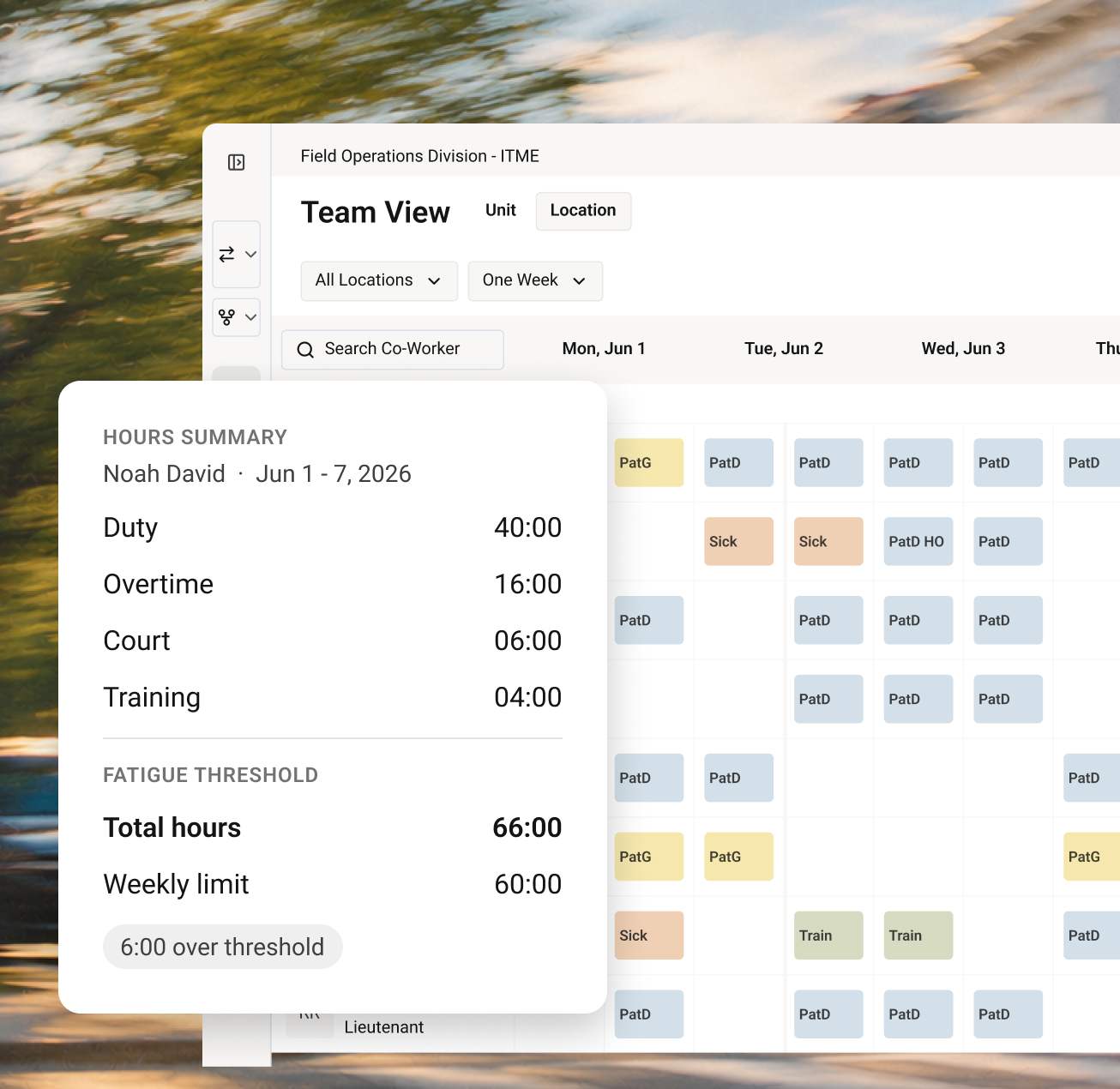
Identify upcoming rotations that exceed your agency’s fatigue thresholds.

Act before assigning

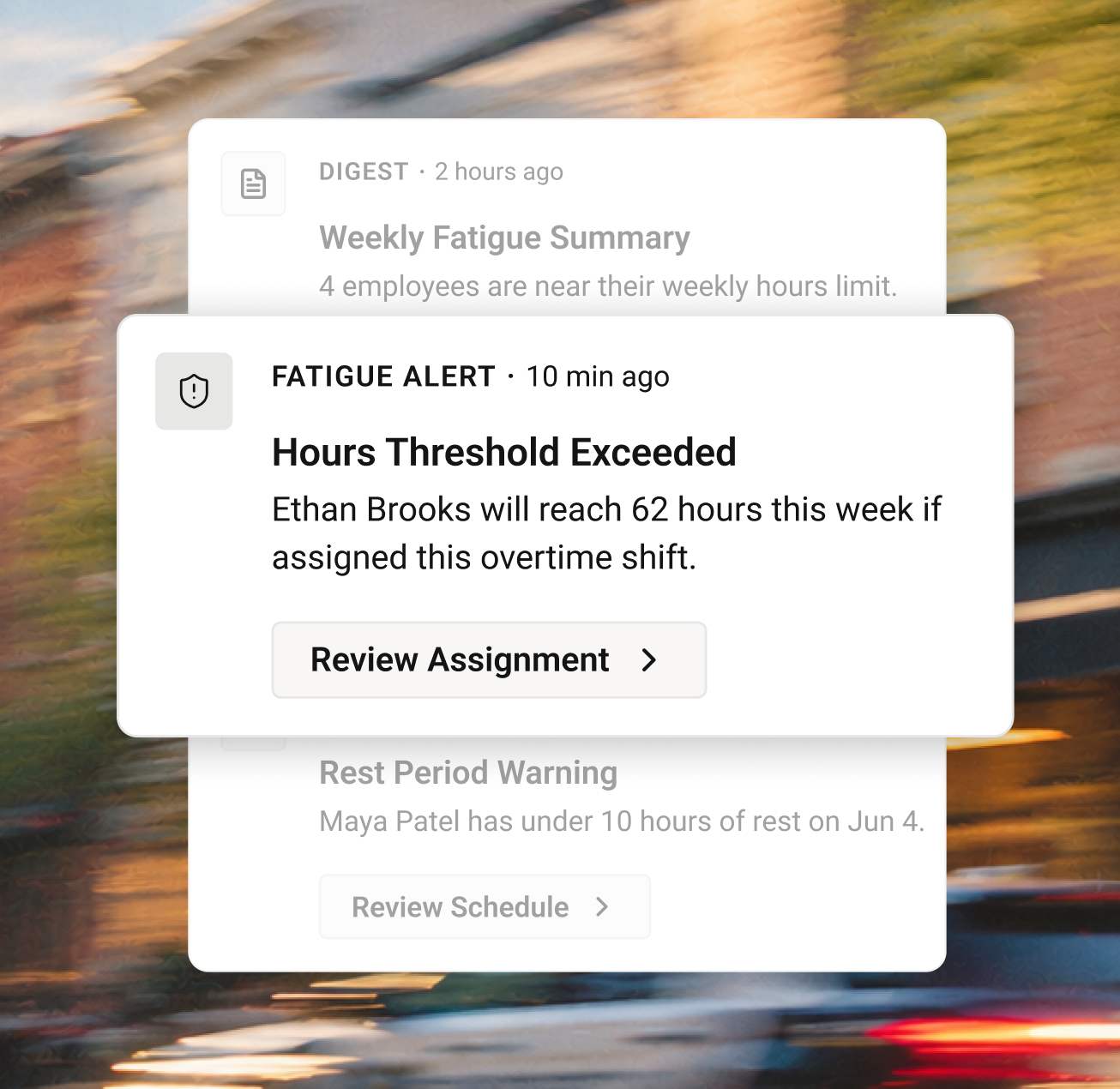
Review fatigue alerts before adding more work to an employee’s schedule.

Check qualifications

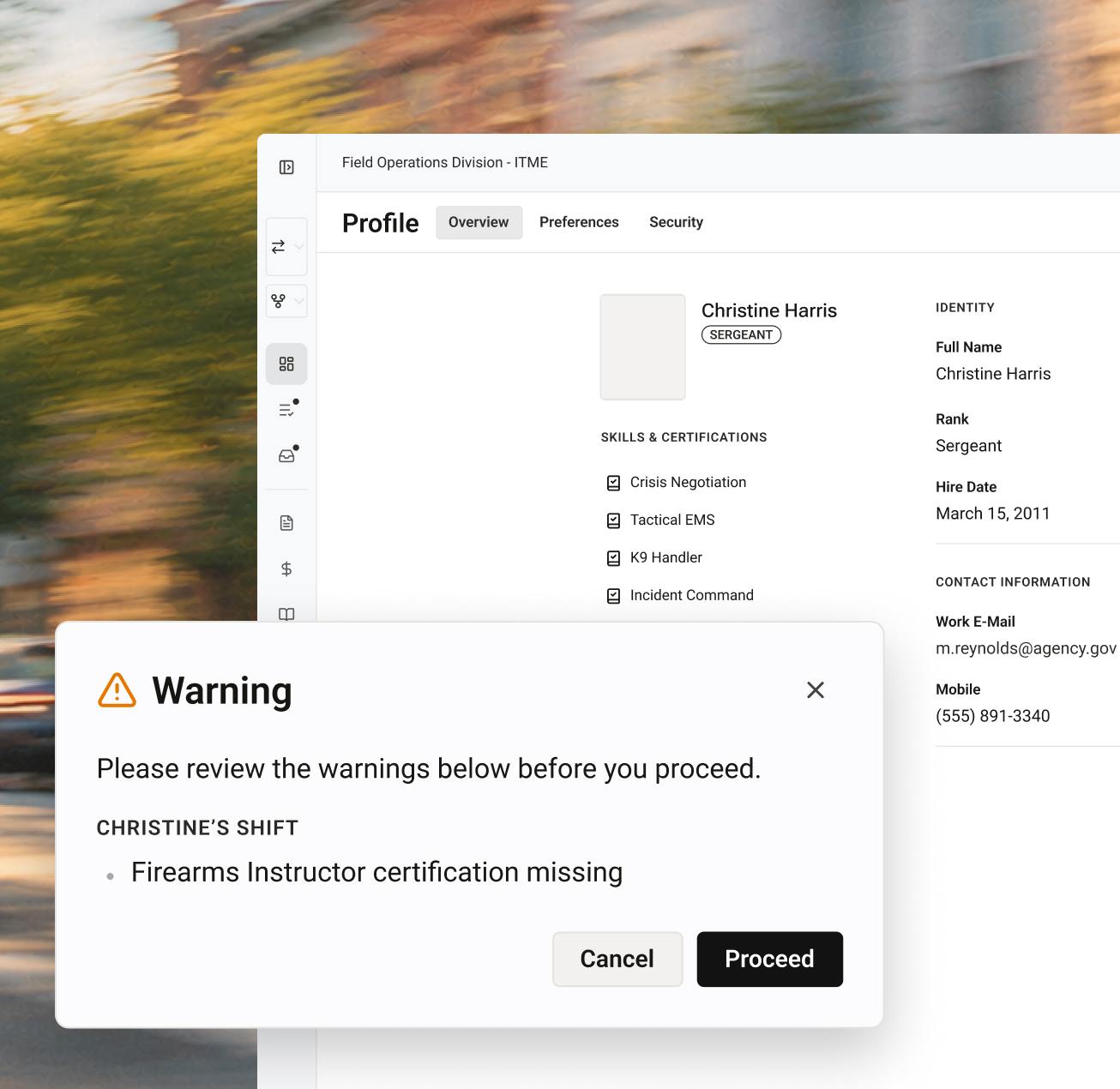
Identify qualification concerns before assigning an employee to a shift.

Make support accessible

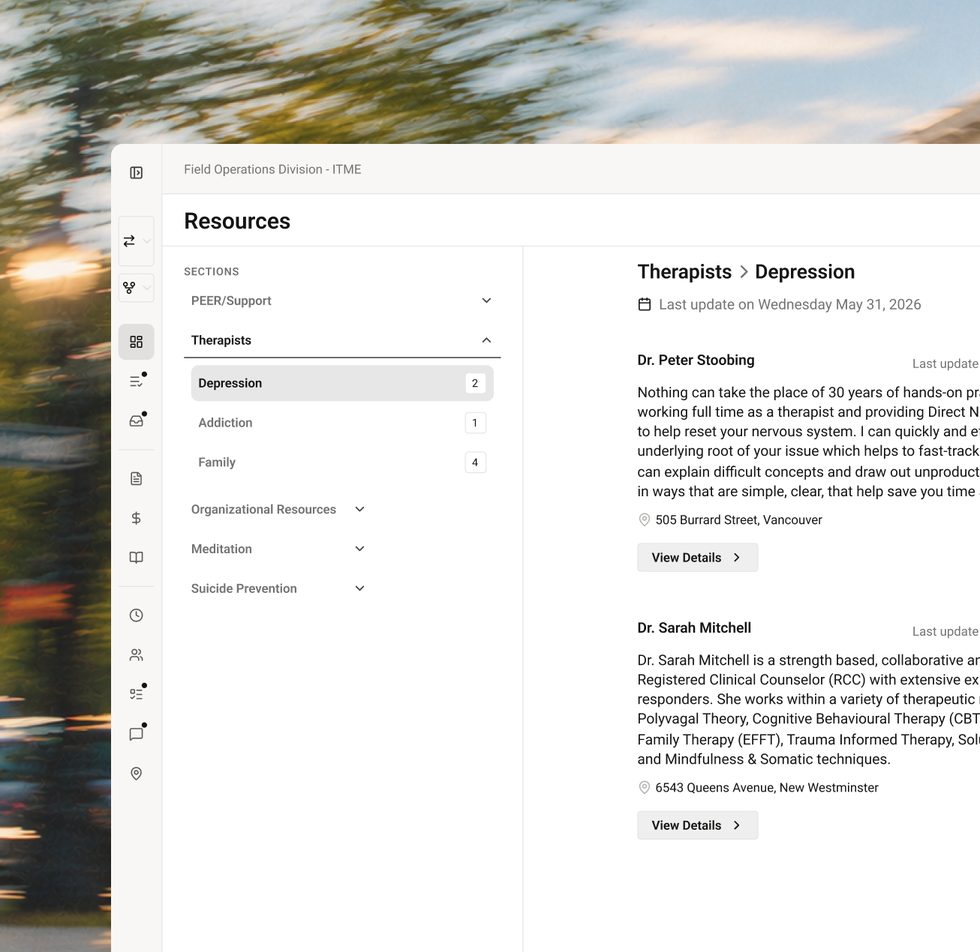
Give employees anonymous access to agency-selected wellness resources.

FEATURES

Inside Wellness and Fatigue:
Know where the risks are.

Bring scheduling-related risks into focus, giving agencies the insight to better support their people and the communities they serve.

Find the work patterns that need attention

  • Review recorded duty, overtime, court, and training hours against your fatigue thresholds.
  • Look ahead at upcoming work rather than waiting until a demanding period has passed.
  • Drill into units, teams, or individuals to understand where scheduling changes may help.

Bring your fatigue rules into assignment decisions

  • Use InTime Scheduling alerts to flag assignments that exceed configured hours thresholds.
  • Set limits around your agency policies and union requirements.
  • Give supervisors a prompt to review the assignment before placing more demand on an employee.

Check training requirements before assigning work

  • Use scheduling alerts to flag when an employee lacks the training required for an assignment.
  • Bring qualification concerns into the scheduling decision alongside fatigue warnings.
  • Give supervisors a reason to review the assignment before it reaches the employee.

Make agency support available around the clock

  • Populate the Wellness Resource Library with resources selected for your employees.
  • Give staff anonymous access through the web or a smartphone, 24/7.
  • Update the library as your team’s needs change so employees have a central place to find support.
InTime Team View schedule with an hours summary of duty, overtime, court, and training hours against a fatigue threshold
InTime fatigue alert notifications for an hours threshold, weekly fatigue summary, and rest period warning
InTime scheduling warning flagging a missing firearms instructor certification on an employee profile
InTime Wellness Resource Library listing therapists for depression support with addresses and details
CASE STUDY

Because the people behind every shift matter.

"InTime Wellness helped us identify potential situations where we’re placing unnecessary burdens on our employees through scheduling."

Johnson County Sheriff's Office badge

Johnson County KS Sheriff

Jonathan Koch, Regional Peer Support Coordinator

488

Sworn officers

640K

Population served

HOW IT WORKS

Know the risks.
Make more informed decisions.

01

Set your thresholds

Configure fatigue thresholds around your agency’s policies to flag scheduling risks before additional work is assigned.

02

Get alerted to potential risks

Scheduling alerts flag assignments that exceed your thresholds, while dashboards provide a broader view of workforce fatigue risks.

03

Make informed adjustments

Review flagged assignments and adjust schedules to help manage fatigue risks before adding to an employee’s workload.

See the risks. Support your people.

See how InTime Wellness helps your agency recognize fatigue risks early and make more informed scheduling decisions.

FAQS

Frequently asked questions
about wellness.

InTime Wellness uses scheduling data and configured thresholds to highlight work patterns that need attention. It supports supervisors’ scheduling decisions; it does not measure an employee’s physical condition or diagnose fatigue.

Yes. Supported by InTime Scheduling, fatigue alerts can reflect the hours thresholds in your agency policies and union rules. Our team can review those requirements with you during configuration.

Yes. Wellness monitoring brings together recorded regular duty, overtime, extra duty, court, training, and leave. That gives supervisors a broader view of work patterns than regular shifts alone.

Yes. The Wellness Resource Library provides anonymous access through the web or a smartphone, 24/7. Your agency selects the resources and can update them as staff needs change.